Outcomes, not outputs: A new paradigm for government grantmaking
Posted on 25 Mar 2026
By Kathy Richardson, executive director, and Jen Riley, chief impact officer, Our Community
Share this article
Ezra Klein and Derek Thompson’s bestseller Abundance is quietly circulating through the upper ranks of government.
Its central warning, that governments have become tangled in process, losing sight of what they are trying to achieve, has found ready resonance at a time when ministers and senior officials alike are rediscovering the lost art of focusing on outcomes. But rediscovery must be followed by reform.
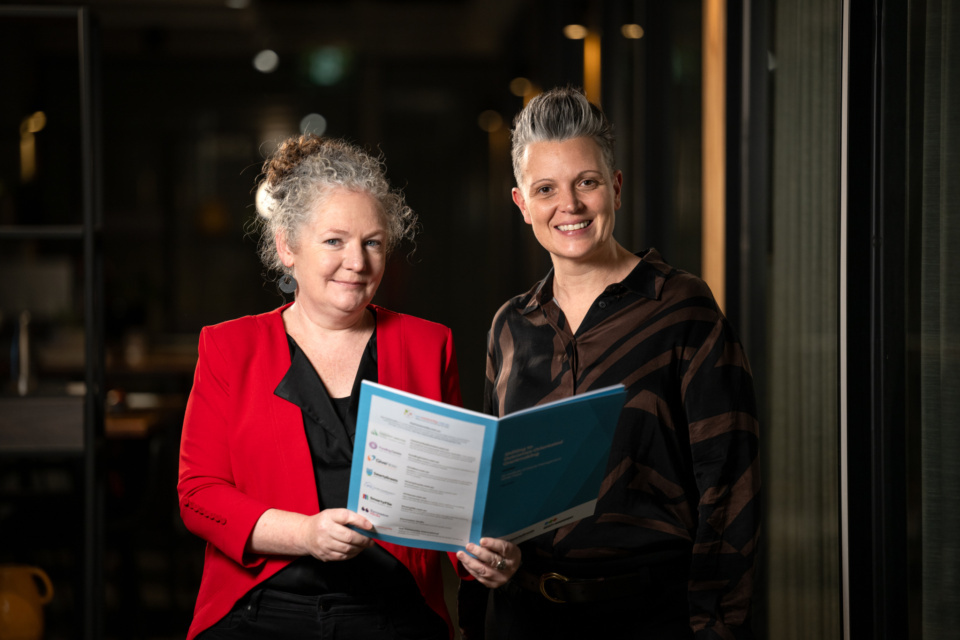
The Institute of Grants Management, a sibling to Our Community’s SmartyGrants enterprise, has recently published its latest white paper: Shifting to Outcomes-Orientated Grantmaking.
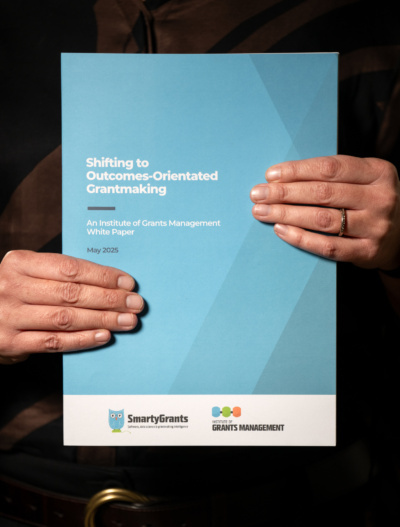
Underpinned by Our Community’s two decades of experience in developing grants management software and improving grantmaking efficiency and strategy, the white paper offers a pathway from a system of public funding based on compliance metrics to one striving for real-life change. In other words, a pathway from outputs, such as “400 women aged 75 to 85 attended 26 weekly strength training sessions”, to outcomes, such as “300 women aged 75 to 85 reported increased mobility and independence, and improved quality of life, as a result of attending 26 weekly strength training sessions”.
In many ways, the white paper arrives at the perfect moment. Across the UK, there is renewed focus on public service reform, productivity, prevention and value for money. Governments are increasingly asking not just what has been delivered, but what difference it made. But we cannot measure what we do not define. And for too long, too many grant programmes have failed to define, let alone evaluate, their intended outcomes.
The desire for outcomes-focused funding is no longer aspirational. It is becoming a practical necessity for governments under pressure to do more with limited resources, while demonstrating real public value.
“Evaluation is often underfunded, sporadic and siloed from decision-making.”
The problem we face: billions out the door, but to what end?
Governments distribute many billions annually through grants. But ask most grant administrators, or even ministers, what changed as a result of a programme, and you are likely to get anecdotes, spending statistics or output tallies: how much was spent, how many sessions were delivered, how many widgets were made. It is a situation reminiscent of Klein and Thompson’s critique: a bureaucracy hyper-optimised for governance inputs, but blind to societal outcomes.
This is not because public servants are not committed. It is because their systems, incentives and data infrastructure do not support an outcomes orientation. Risk aversion leads to box-ticking. Measurement is equated with auditing. Evaluation is often underfunded, sporadic and siloed from decision-making.
Our white paper diagnoses this problem and, more importantly, offers viable solutions.
A framework for realignment
At the heart of our approach is a deceptively simple question: what changed?
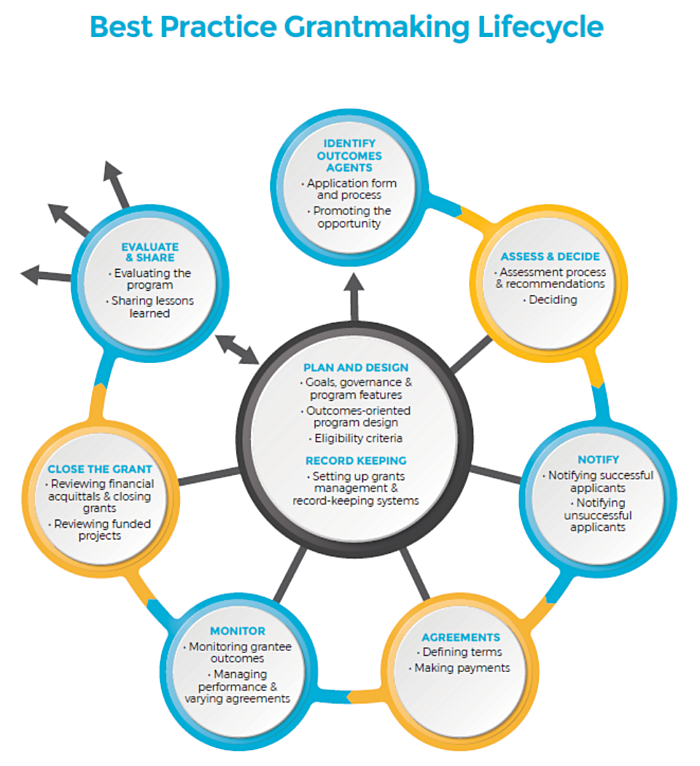
To answer it, we propose a recalibration of the entire grantmaking lifecycle, from planning and design to evaluation and shared learning, all seen through the lens of outcomes. This means clearly articulating desired outcomes from the outset, selecting grantees based on their capacity to deliver those outcomes, tracking both qualitative and quantitative data throughout the funding period, proportionate to the nature and scale of the funding, and closing the loop with structured, standardised reporting.
The white paper offers practical templates, real-world case studies and, crucially, guidance on operationalising the learning, primarily through adoption of the SmartyGrants Outcomes Engine. SmartyGrants, a grants management solution developed in Australia, is already used by more than 800 funders to distribute many billions of dollars worldwide, including more than 220 government funders. More than 160 funders are now tracking outcomes directly through the system. In other words, this is not theoretical. It is already happening.
Our white paper also provides guidance on balancing rigour with feasibility. Not every grant needs a randomised controlled trial. But the funder behind every grant should have a theory of change, or at least a clear rationale, a sense of who the beneficiaries are, and, later, some form of evidence, however modest, about what difference the grant made. We advocate starting small and scaling as confidence grows.
Why this matters for government
The timing of this renewed focus on outcomes is not incidental. As governments grapple with productivity stagnation, climate complexity and intergenerational equity, it is increasingly clear that good intentions are not enough. We need to know what works.
Shifting to outcomes-oriented funding allows governments to:
- learn what delivers results, not just what complies with guidelines
- drive innovation by creating space for feedback and iteration
- build public trust by demonstrating impact, not just expenditure
- support better policymaking with real data on changes in people’s lives
- enable evidence-based budgeting, where funding follows what works
- make the most of every precious pound.
The importance of this approach was underscored by the Australian Assistant Minister for Productivity, Competition, Charities and Treasury, Dr Andrew Leigh, who launched the white paper at the inaugural Grant Impact Forum, held in Melbourne in June.
In his speech, Dr Leigh described the paper as “a call to be stewards of change, not just stewards of money,” highlighting that while outputs matter, they are the means, not the end. His remarks echoed the central argument of the white paper: that robust evaluation depends on defining clear outcomes and collecting consistent, standardised data. If we don’t know what outcomes we’re aiming for, we can’t evaluate them. If we don’t collect comparable data, we can’t make comparisons across programs. And if we punish failure more than we reward insight, we can’t expect honest reporting.
The growing appetite for measuring what matters reinforces the case for a substantial shift in funders’ thinking and systems, one that values learning, impact and accountability in equal measure.
A path forward: the Centre for What Works
As more funders adopt structured, outcomes-focused approaches, the opportunity arises to build something even more powerful: a shared evidence base. That is why we are working towards the creation of a Centre for What Works, a hub where anonymised, aggregated grant data can be used to help answer key questions: what works, for whom, and in what context?
This would represent a significant evolution in how public funding drives public value. It would support learning not just within programmes, but across portfolios and jurisdictions. It would allow the best ideas to be scaled up, and poor performers to improve or adapt.
This is the kind of infrastructure that productivity growth, and public sector legitimacy, depend on.
We invite the sector to join us
The shift to outcomes-oriented grantmaking is not a silver bullet. It requires patience, capability-building and cultural change. But it is entirely achievable. The tools now exist. The case has been made. And the demand, across departments, ministers and the broader community, is real.
As Abundance reminds us, we have spent too long measuring effort instead of effect. It is time to refocus on what actually changes.
Kathy Richardson is executive director of the Institute of Grants Management, a sibling to SmartyGrants, an Our Community enterprise. Jen Riley is chief impact officer of Our Community and SmartyGrants.
Shifting to Outcomes-Orientated Grantmaking is published by the Institute of Grants Management (IGM), part of the Our Community group of enterprises, which also includes SmartyGrants. Through the IGM, we are distilling and disseminating all we’ve learnt about exemplary grants management over more than two decades of work with funders and their grantees. Through SmartyGrants, we’ve embedded proven practices and strategies into grantmakers’ favourite tech tool.
This article was first published in The Mandarin, an Australian publication, and has been lightly edited for this context.
More information
Get our free newsletter
For the latest news and resources for grantmaking professionals, subscribe to our mailing list and get Grants Management Intelligence. It's free!