
When grant money misses the target, it’s not for lack of rules
Posted on 25 Aug 2026
A decade of independent audit evidence reveals there’s a big gap between good grants policy and…
Posted on 24 Nov 2025
By Matthew Schulz, journalist, Institute of Grants Management
The deployment of third-party grant assessors can reduce the risks to funders of corruption, conflict of interest and reputational damage, according to a professional grants management expert.

SmartyGrants managed services leader Stephen Foxworthy said his team’s recent in-depth review of grants audits demonstrated the need for further reform in the area.
Foxworthy said the use of independent assessors could reduce reputational and political risks linked to assessments by those with perceived or actual conflicts of interests.
SmartyGrants offers its own assessment services in Australia, which Foxworthy described as a response to “the need to improve the fairness, consistency and integrity of funding decisions”.
He said that audits in each state and territory of Australia, reviews by the federal grants watchdog, and parliamentary oversight committees had repeatedly raised concerns about the integrity of grants, particularly those subject to claims of "pork-barrelling" (the funnelling of public money into electorates for political advantage) in the lead-up to elections.
Government grant guidelines in multiple Australian states warn that the risk of conflicts of interest can be at its greatest at the assessment stage, a fact highlighted by an in-depth investigation into grants administration by the South Australian Independent Commission Against Corruption (ICAC) last year.
“Decisions made to provide grants funding to individuals and organisations should show good planning and assessment, be made in an equitable manner, be open to scrutiny, and demonstrate value for public money,” wrote the then SA ICAC commissioner Ann Vanstone. “Decisions made with disregard of these standards erode public confidence and raise suspicions of corruption.”
Foxworthy said external assessors could help reduce real or perceived conflicts of interest, counter the limited training of internal assessors, and strengthen public trust in government and philanthropic grants.
The Institute of Grants Management, SmartyGrants’ grants education arm, has previously examined what constitutes best practice for assessment panels, including those where assessors have an interest.
Foxworthy said that arm’s length assessments could increase probity, reduce bias, ensure merit-based assessment, and offer the ability to scale up assessments for larger programs, when needed.
He said grant applicants may perceive independent assessments to be fairer, while for funders they signal a commitment to transparency.
Posted on 25 Aug 2026
A decade of independent audit evidence reveals there’s a big gap between good grants policy and…

Posted on 24 Jun 2026
A just-published report tracking philanthropic and voluntary sector grantmaking in the UK shows…

Posted on 24 Jun 2026
The International Fund for Ireland, Stratford Town Trust and Glasgow City Council are among the…

Posted on 04 Jun 2026
SmartyGrants speakers highlighted opportunities to introduce consistency in areas such as…

Posted on 27 May 2026
I've spent a fair chunk of my career listening to what I've come to call "grants rage." On one…
Posted on 27 May 2026
A new report from Philanthropy Ireland has mapped the structure of Ireland’s philanthropic sector,…

Posted on 13 Apr 2026
SmartyGrants is ensuring its artificial intelligence tools are fair and useful by focusing on how…

Posted on 02 Apr 2026
Grantmakers are under increasing pressure to demonstrate what their funding actually achieves –…

Posted on 01 Apr 2026
SmartyGrants is increasing its use of artificial intelligence (AI) and has outlined a strategy to…
Posted on 25 Mar 2026
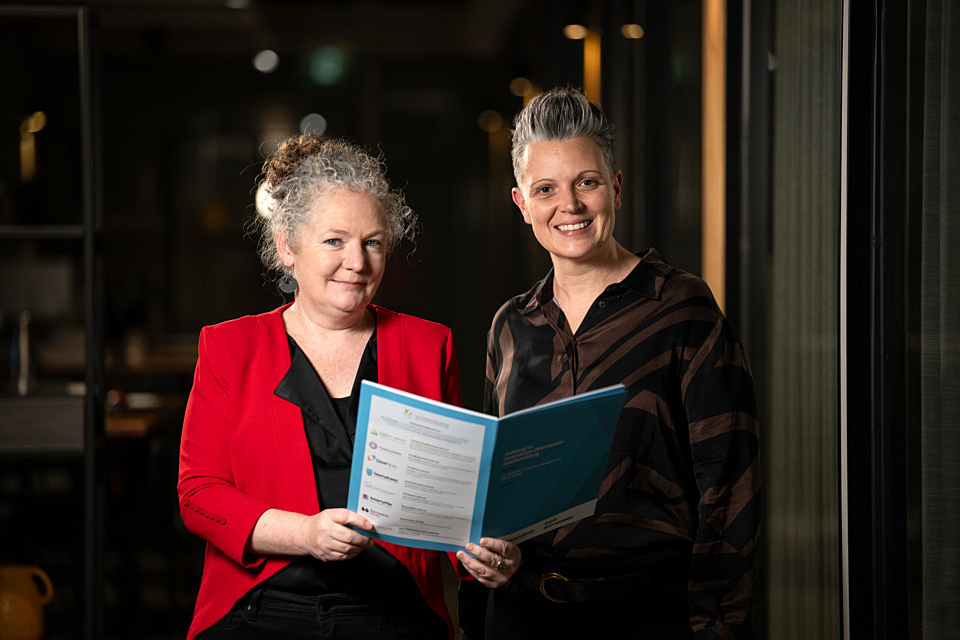
Co-authors Kathy Richardson and Jen Riley with the recent IGM whitepaper. Picture: Penny Stephens…

Posted on 24 Mar 2026
If you spend long enough around government grants programs, a pattern emerges.