
When grant money misses the target, it’s not for lack of rules
Posted on 25 Aug 2026
A decade of independent audit evidence reveals there’s a big gap between good grants policy and…
Posted on 01 May 2025
By Jen Riley, chief impact officer, SmartyGrants

With the charities sector juggling restricted grants, tight timelines, and a must-succeed narrative, it’s no wonder many organisations default to “polished” reporting.
It’s not about misleading – it’s about survival. It’s about trying to be seen as worthy of support in a system that often equates complexity with risk, a system that makes it genuinely hard to communicate impact with honesty, clarity, and confidence.
So we report what’s safe. We soften what’s tricky. And we miss out on the real gold: the insights that would help us do better.

At a recent Australian gathering, I shared this message with grantmakers and changemakers: we don’t need more data – we need a better relationship with the data we already have.
If we want to shift the culture, we need to shift the conversation. That starts with reframing the way we talk about data.
Instead of “Subjective participant experience relating to interpersonal safety and dignity,” how about: “Did participants feel safe and respected?”
Instead of “Participant likelihood to recommend program to others,” try: “Would they tell a friend to come along?”
Plain language is not a downgrade. It’s an invitation – for your board, your team, your funders – to lean in and actually engage.
And when you combine the resulting data with context and a participant voice? That’s where real meaning lives.
“I walked in expecting to feel awkward and leave early. But I stayed the whole session. People asked my pronouns, used them, and actually listened. I didn’t know how much I needed that until it happened.” – Alex, 19
No bar chart can carry the kind of impact that Alex’s personal account does. Pair it with data, and it becomes a powerful insight, not just a number.

We often treat impact reporting like a finish line. But what if it were more like a feedback loop?
The organisations I see reporting their impact well are creating space for reflection. They’re experimenting with dashboards, "yarning circles", even art. They’re designing reports for different audiences and using the 1-3-25 model to give everyone something they can actually use (one page of main messages, a three-page executive summary, and no more than 25 pages of findings).
Crucially, they’re transparent about their achievements and findings.
This isn’t a call-out. It’s a call-in.
To the funders reading this: ask good questions. Make room for grey areas. Reward curiosity.
To the charities: you’re doing hard work under complex conditions. Don’t be afraid to show what you’ve learned as well as what you’re achieved.
To all of us: let’s stop seeing data as a performance, and start using it as a tool for collective growth.
Because when we shift the culture of data – from fear to reflection, from proof to learning – we make it easier for everyone in the system to do better work.
Posted on 25 Aug 2026
A decade of independent audit evidence reveals there’s a big gap between good grants policy and…

Posted on 24 Jun 2026
A just-published report tracking philanthropic and voluntary sector grantmaking in the UK shows…

Posted on 24 Jun 2026
The International Fund for Ireland, Stratford Town Trust and Glasgow City Council are among the…

Posted on 04 Jun 2026
SmartyGrants speakers highlighted opportunities to introduce consistency in areas such as…

Posted on 27 May 2026
I've spent a fair chunk of my career listening to what I've come to call "grants rage." On one…
Posted on 27 May 2026
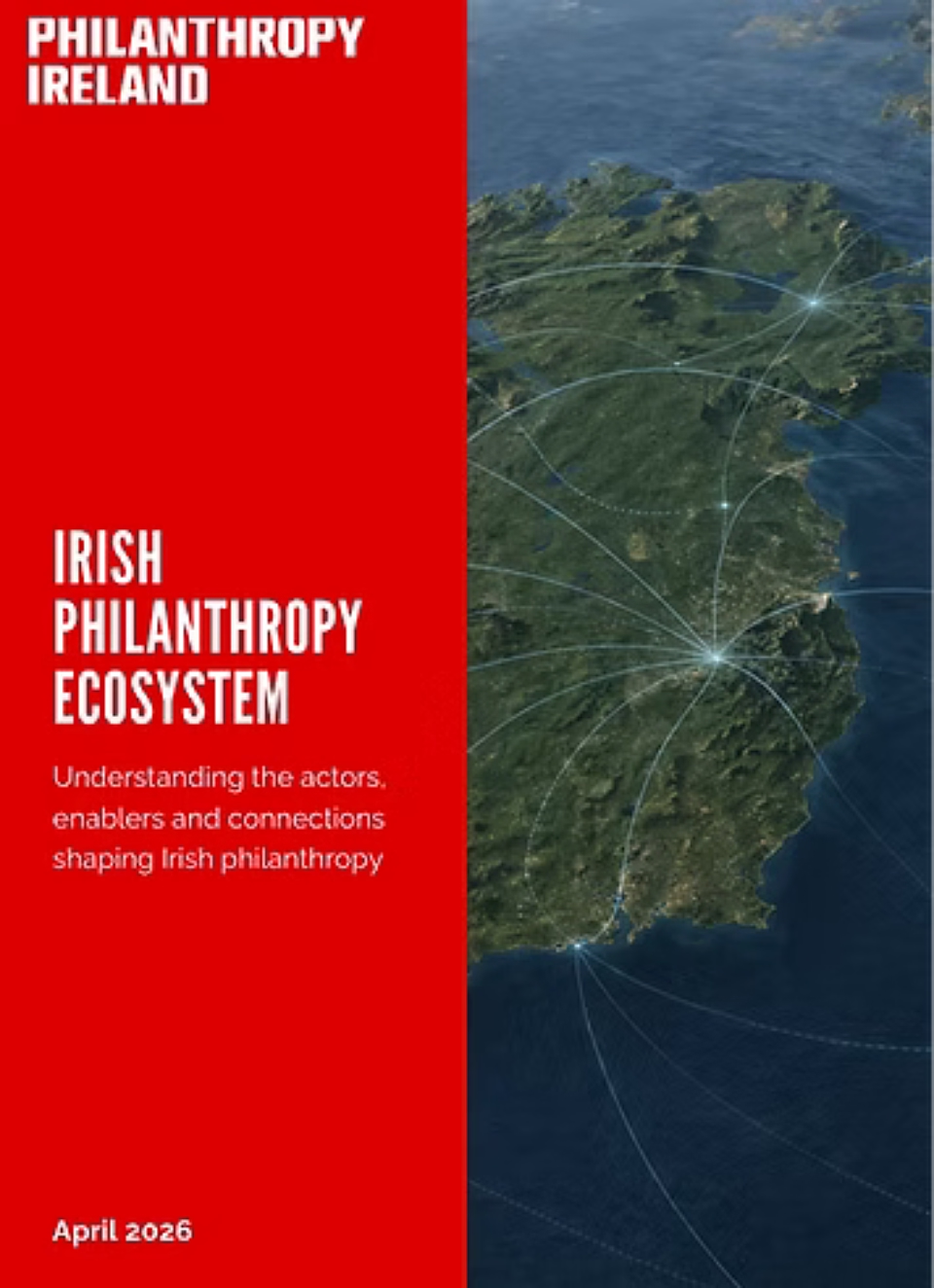
A new report from Philanthropy Ireland has mapped the structure of Ireland’s philanthropic sector,…

Posted on 13 Apr 2026
SmartyGrants is ensuring its artificial intelligence tools are fair and useful by focusing on how…

Posted on 02 Apr 2026
Grantmakers are under increasing pressure to demonstrate what their funding actually achieves –…

Posted on 01 Apr 2026
SmartyGrants is increasing its use of artificial intelligence (AI) and has outlined a strategy to…
Posted on 25 Mar 2026
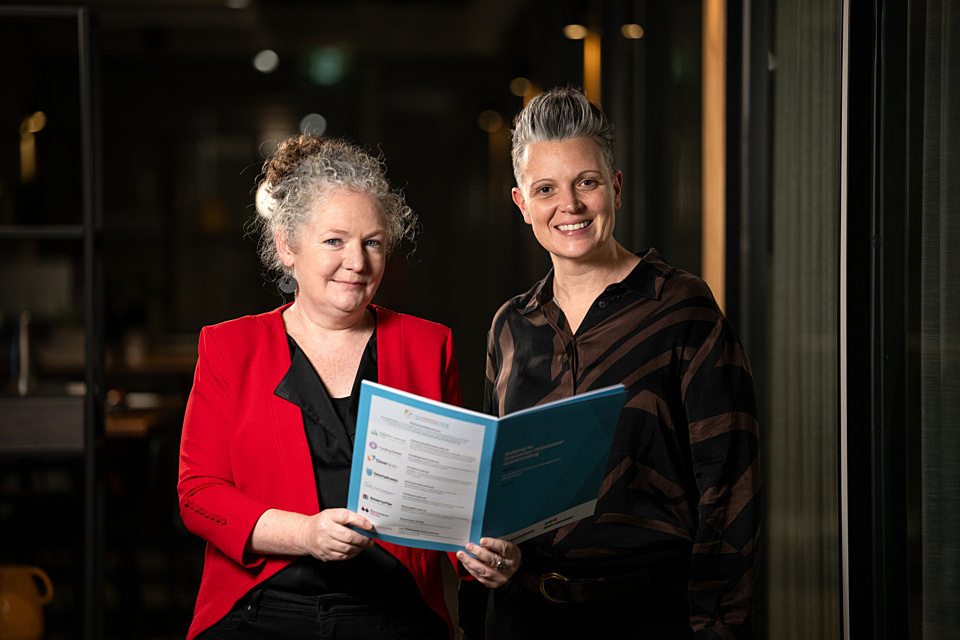
Co-authors Kathy Richardson and Jen Riley with the recent IGM whitepaper. Picture: Penny Stephens…

Posted on 24 Mar 2026
If you spend long enough around government grants programs, a pattern emerges.