
Grantmakers face funding shake-up under England's devolution plan
Posted on 05 Oct 2026
As the UK government rolls out a sweeping devolution agenda that promises to shift power and…
Posted on 07 Oct 2026
By Matthew Schulz, journalist, Institute of Grants Management

While most funding programmes run by local authorities "were designed to award grants”, the new devolution model seeks to increase reliance on “repayable and recyclable finance," according to an expert in business growth and finance.
The UK government's "Rewiring the State" agenda – championed by Prime Minister Andy Burnham – seeks to shift power and funding control from Whitehall to England's regional mayors. It includes a push for every mayor to establish a "Good Growth Fund," modelled on Greater Manchester's own £2 billion fund, which favours loans and equity investments that can be repaid and reinvested over traditional one-off grants.
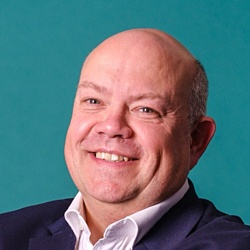
Simon Goon, the chief investment officer at UMi – which advises public bodies and businesses on growth funding and investment readiness – said that a sustainable, recyclable model "requires different skills, to design and deliver with different governance and, perhaps most importantly, a different mindset”.
Grants Management Intelligence quizzed Goon ahead of a webinar on the issue to be hosted next month by UMi, and he said many authorities faced a “capacity challenge”.
"Teams are being asked to design increasingly sophisticated interventions at a time when budgets are tighter, scrutiny is higher and delivery teams are often smaller," Goon said.
"The risk is that innovation is crowded out by operational pressure."
Goon said authorities need to shift their attention to adapt to the changes.
"There's … a tendency to focus on how the money is allocated when the bigger issue is often financial readiness. If businesses aren't investment-ready, simply creating another fund won't solve the problem."
Instead, the authorities that were best placed to adapt to the new models of recyclable funding were those with “access to longer term, self-determined budgets".
Those authorities were "already thinking in terms of ecosystems rather than programmes”, had existing relationships with investors and intermediaries, and were willing to take a longer-term view of impact, he said.
"If businesses aren't investment-ready, simply creating another fund won't solve the problem."
In contrast, organisations most at risk of falling behind in the new system “are those that continue to see funding as a series of short-term cyclical interventions".
“If every new programme starts from scratch, there's little opportunity to build capability, recycle capital or develop an enduring investment culture,” Goon said.
While much of the conversation about devolution has focused on the location of affected authorities, Goon suggested the new financial model was “less about geography and more about the maturity of the intermediaries and partners that work within it to help businesses become more financially ready”.
Shifting from one-off grants to recyclable finance meant a focus on goals, not just increasing funds being distributed, Goon said.
“The first step is recognising that fund design starts with the outcome, not the funding instrument.
“For example, how quickly do you want the monies back, what do you want more – job creation or fund returns?”
“The first step is recognising that fund design starts with the outcome, not the funding instrument".
Structurally, “authorities need governance arrangements that support investment decisions”. Financially, authorities need to rethink how capital could “continue generating impact rather than being spent once and gone”, he said.
Goon suggested authorities needed a better understanding of debt, equity, risk management and financial readiness, and an ability to build partnerships able to “build a pipeline of investment-ready businesses” to ensure a “steady flow” of demand.
He said the principles involved in recyclable finance could be applied in a variety of other areas, but that did not mean only one model – such as Greater Manchester’s approach – could be used.
“The model should reflect local market conditions, but the principle of making public money work more than once is broadly applicable. In some areas, that may mean a stronger focus on debt than equity, or a blended approach combining grants and repayable finance.”
While grants are presented as a “last resort” in the Greater Manchester Combined Authority’s Good Growth Fund approach, Goon said they “remain the right tool in certain circumstances”.
"Where government is trying to stimulate entirely new markets, support innovation and new technologies, encourage inward investment or tackle significant market failures, grant funding can still play a vital role," Goon said.
“The question isn't whether grants disappear. It's whether we become more selective about when we use them and how they can be combined with other forms of finance to create longer-lasting impact.”
Goon said there remained a risk that new funding powers would “arrive faster than capability”, but organisations were motivated to adapt.
“Many authorities are currently building new structures, governance arrangements and teams while simultaneously trying to develop policy, design interventions and deliver economic outcomes and manage public expectations. That's a significant challenge.”
But he was confident that “capability can be developed” and said he had witnessed a “strong appetite among local leaders to think differently about funding and impact”.
Posted on 05 Oct 2026
As the UK government rolls out a sweeping devolution agenda that promises to shift power and…

Posted on 05 Oct 2026
At its simplest, place-based work brings people, organisations and resources together to address…

Posted on 26 Aug 2026
A small UK grantmaker believes new technology should not undermine the value it places on the human…

Posted on 25 Aug 2026
A decade of independent audit evidence reveals there’s a big gap between good grants policy and…

Posted on 24 Jun 2026
A just-published report tracking philanthropic and voluntary sector grantmaking in the UK shows…

Posted on 24 Jun 2026
The International Fund for Ireland, Stratford Town Trust and Glasgow City Council are among the…

Posted on 04 Jun 2026
SmartyGrants speakers highlighted opportunities to introduce consistency in areas such as…

Posted on 27 May 2026
I've spent a fair chunk of my career listening to what I've come to call "grants rage." On one…
Posted on 27 May 2026
A new report from Philanthropy Ireland has mapped the structure of Ireland’s philanthropic sector,…

Posted on 13 Apr 2026
SmartyGrants is ensuring its artificial intelligence tools are fair and useful by focusing on how…

Posted on 02 Apr 2026
Grantmakers are under increasing pressure to demonstrate what their funding actually achieves –…